

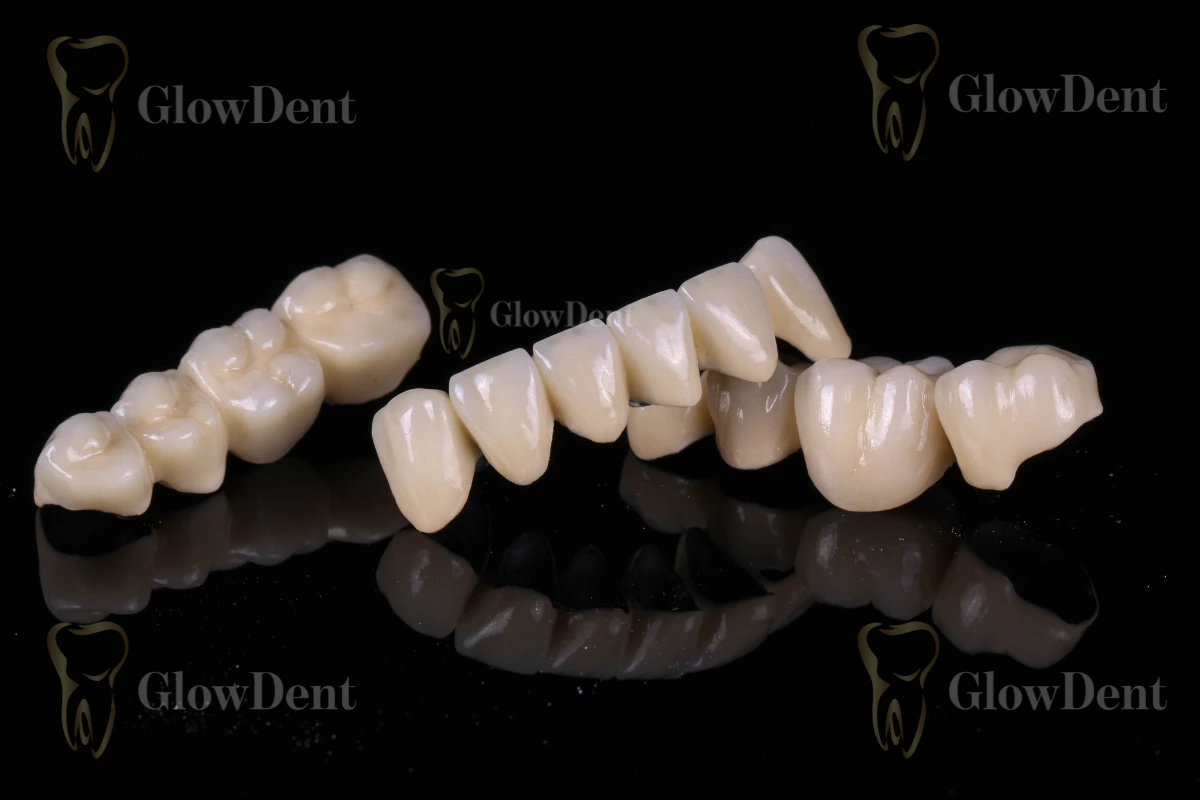
When is it necessary to replace a damaged or lost tooth?
Teeth can become damaged for various reasons—due to cavities, large fillings, fractures, or following root canal treatment. When the natural tooth crown can no longer perform its function or detracts from the smile's aesthetics, prosthetic therapy offers a long-term solution.
One of the most commonly used options in modern dentistry is metal dental crowns, also known as metal-ceramic crowns. Thanks to the combination of the strength of metal and the aesthetics of ceramics, metal-ceramic crowns have long served as a reliable solution for restoring individual teeth and creating dental bridges.
Although zirconia crowns have become very popular in recent years, metal-ceramic crowns still hold a significant place in prosthetic treatment due to their durability, resistance, and excellent price-to-quality ratio.
What are metal dental crowns?
Metal dental crowns are prosthetic restorations that completely cover a damaged tooth and restore its natural shape, function and appearance.
Modern metal crowns almost always refer to metal-ceramic crowns, meaning they consist of two interconnected components:
- an internal metal structure that provides exceptional strength,
- of the outer layer of dental ceramic that mimics the natural appearance of the tooth.
This combination ensures the crown is strong enough to withstand daily chewing, yet aesthetically pleasing enough to blend harmoniously into the patient's smile.
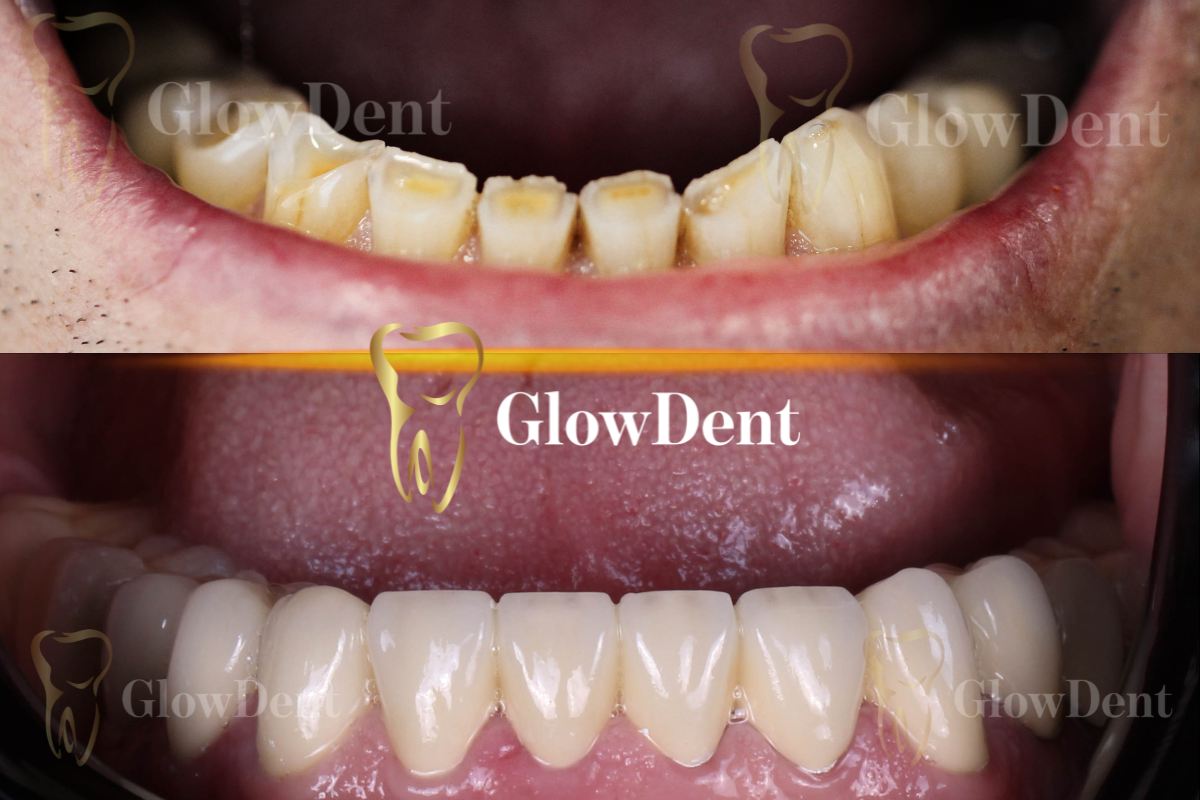
What is metal-ceramic?
Metal-ceramic is a prosthetic material that successfully combines functionality and aesthetics.
The metal core provides stability to the entire structure, while the ceramic veneer ensures a natural tooth color and shape. Thanks to this, metal-ceramic crowns have been used for decades and are considered one of the most proven solutions in dental prosthetics.
Modern ceramic materials allow metal-ceramic crowns to look much more natural than in the past, so many patients choose them precisely for their reliability and longevity.
When are metal dental crowns recommended?
Metal-ceramic crowns are recommended in situations where the natural tooth can no longer be effectively restored with a filling.
The most common indications are:
- a tooth that is significantly damaged by caries,
- tooth after root canal treatment,
- cracks or fractures of teeth,
- severe damage caused by tooth wear,
- aesthetic irregularities in shape or color,
- fabrication of dental bridges
- combined works
For posterior teeth, where chewing forces are greatest, metal-ceramic represents an exceptionally reliable solution.
What does the process of making a metal-ceramic crown look like?
The fabrication of a metal-ceramic crown involves several precise steps.
1. Examination and treatment plan
During the first examination, the dentist assesses the condition of the teeth, surrounding tissues and bite in order to choose the best prosthetic solution.
2. Tooth preparation
The tooth is carefully shaped to create space for the future crown while maximizing the preservation of healthy tooth tissue.
3. Digital or conventional impression
Digital scanning is increasingly used in modern dentistry, offering exceptional precision and greater patient comfort.
4. Temporary crown
While the permanent metal-ceramic crown is being fabricated, the patient wears a temporary restoration.
5. Laboratory fabrication
The dental technician fabricates the metal framework, after which ceramic is applied in multiple layers to provide a natural tooth appearance.
6. Try-in and cementation
Once the shape, color, contact with adjacent teeth, and bite have been checked, the crown is permanently cemented.
What is a metal-ceramic bridge?
When one or more teeth are missing, a dental bridge can be the solution.
A metal-ceramic bridge consists of several interconnected crowns that replace missing teeth while resting on natural teeth or implants.
A metal-ceramic bridge offers:
- stability during chewing,
- more natural speech,
- preservation of jaw function,
- aesthetic harmony of the smile.
In the case of larger bridges, it is precisely the metal structure that provides additional safety and resistance to loads.
Devotion to metal ceramics
Metal-ceramic crowns have numerous advantages:
- exceptional strength,
- long service life,
- resistance to high chewing forces,
- excellent value for money,
- very good aesthetics,
- the possibility of building large bridges,
- long-standing clinical validation.
For this very reason, they remain one of the most frequently used prosthetic solutions today.
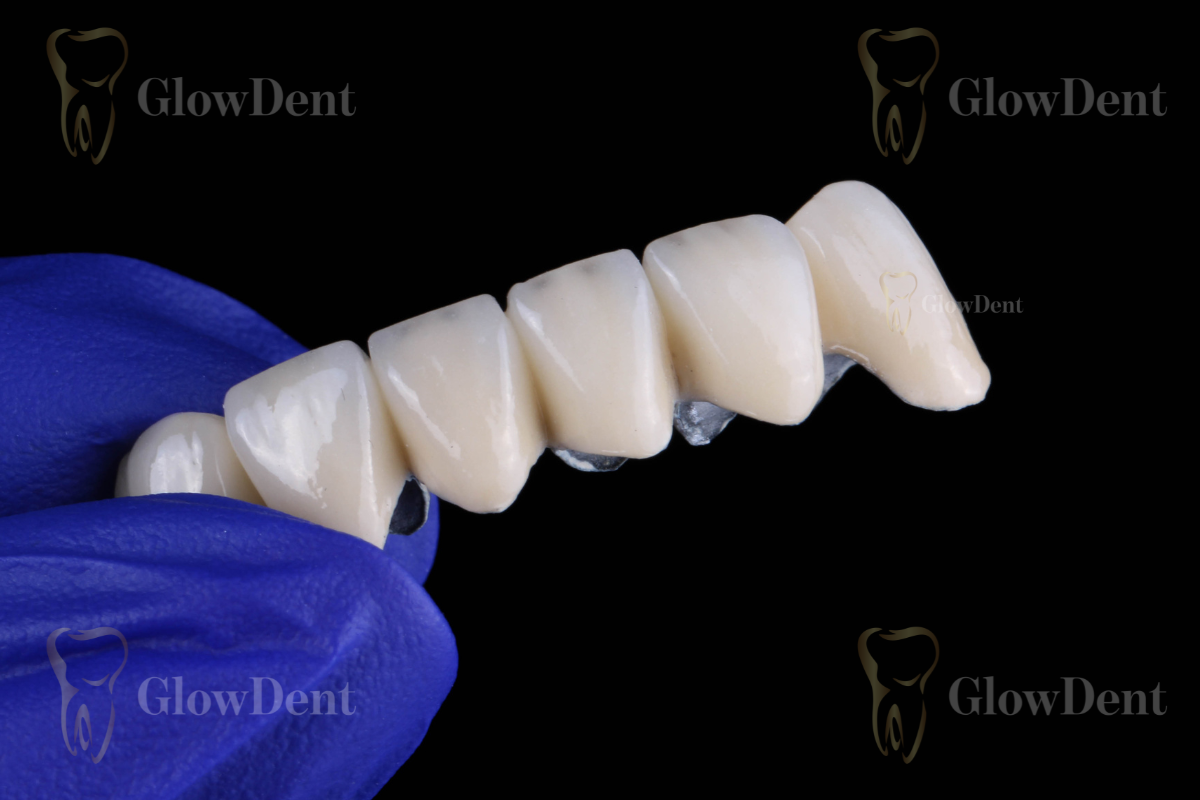
Does metal-ceramic have any disadvantages?
Every material has its own characteristics.
With metal-ceramic crowns, it should be taken into account that:
- they are not completely transparent like natural teeth,
- when the gums recede after many years, a dark edge of the metal may become visible,
- For anterior teeth with extremely high aesthetic requirements, zirconia may be a better choice.
However, in a large number of patients, these differences are not pronounced, particularly regarding posterior teeth.
Metal-ceramic or zirconia crowns?
| Metal-ceramic | Zirconia crowns |
|---|---|
| Very sturdy | Very sturdy |
| Excellent for bridges | Excellent for single crowns and bridges. |
| Better price | Higher price |
| Good aesthetics | Superb aesthetics |
| Long-standing clinical use | Modern high-tech material |
There is no single best solution. The choice depends on the position of the teeth, functional requirements, and the aesthetic expectations of each patient.
How long do metal crowns last?
With proper oral hygiene and regular dental check-ups, metal-ceramic crowns can last 10 to 15 years, and often even longer than 20 years.
Their longevity depends on:
- build quality,
- oral hygiene,
- habit of the patient,
- regular check-ups.
How should metal-ceramic crowns be maintained?
To ensure metal-ceramic crowns last as long as possible, it is necessary to:
- brush your teeth at least twice a day,
- use interdental brushes or dental floss,
- regularly remove tartar,
- avoid biting very hard objects,
- to come in for regular dental check-ups.
Proper maintenance is just as important as the quality of the workmanship itself.
Frequently Asked Questions
Do metal crowns look natural?
Yes. Thanks to the ceramic layer, metal-ceramic crowns can very successfully mimic the natural color and shape of teeth.
How long does it take to make a metal-ceramic crown?
Usually between a few days and two weeks, depending on the complexity of the work and the laboratory process.
Can metal-ceramic change color?
No. Ceramics do not absorb pigments from food and drinks like natural teeth, so they retain their color over the years.
Is metal-ceramic better than zirconia?
Both materials have their advantages. Metal-ceramic stands out particularly for its strength and more affordable price, while zirconia offers superior aesthetics. The best choice depends on the clinical situation.
Dentist advice GlowDent
Metal dental crowns—specifically metal-ceramic ones—remain one of the most reliable solutions in modern dental prosthetics. Thanks to a combination of strength, durability, and aesthetic appeal, they are successfully used for restoring individual teeth and fabricating metal-ceramic bridges.
When choosing between metal-ceramic and other prosthetic materials, it is important to consider the position of the teeth, functional requirements, aesthetic preferences, and the dentist's recommendation. An individualized approach allows for the selection of a solution that ensures long-lasting functionality and a natural-looking smile.