

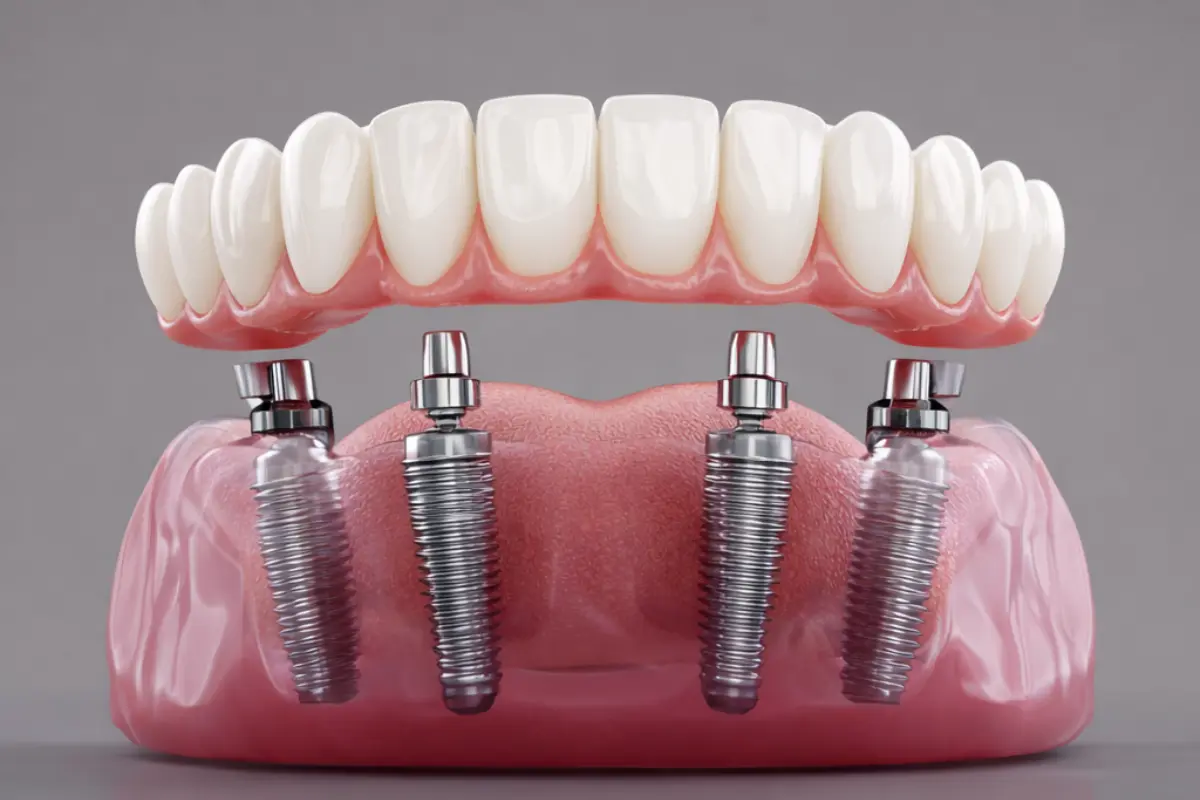
Gubitak svih zuba u jednoj vilici nije samo estetski problem. On utiče na žvakanje, govor, samopouzdanje, ali i na zdravlje cijelog organizma. Danas, zahvaljujući savremenoj implantologiji, postoji rješenje koje pacijentima vraća funkciju i prirodan osmijeh – all on 4 sistem.
Below, we explain clearly and simply what all on 4 is, how it works, and who it is intended for.
What is all on 4?
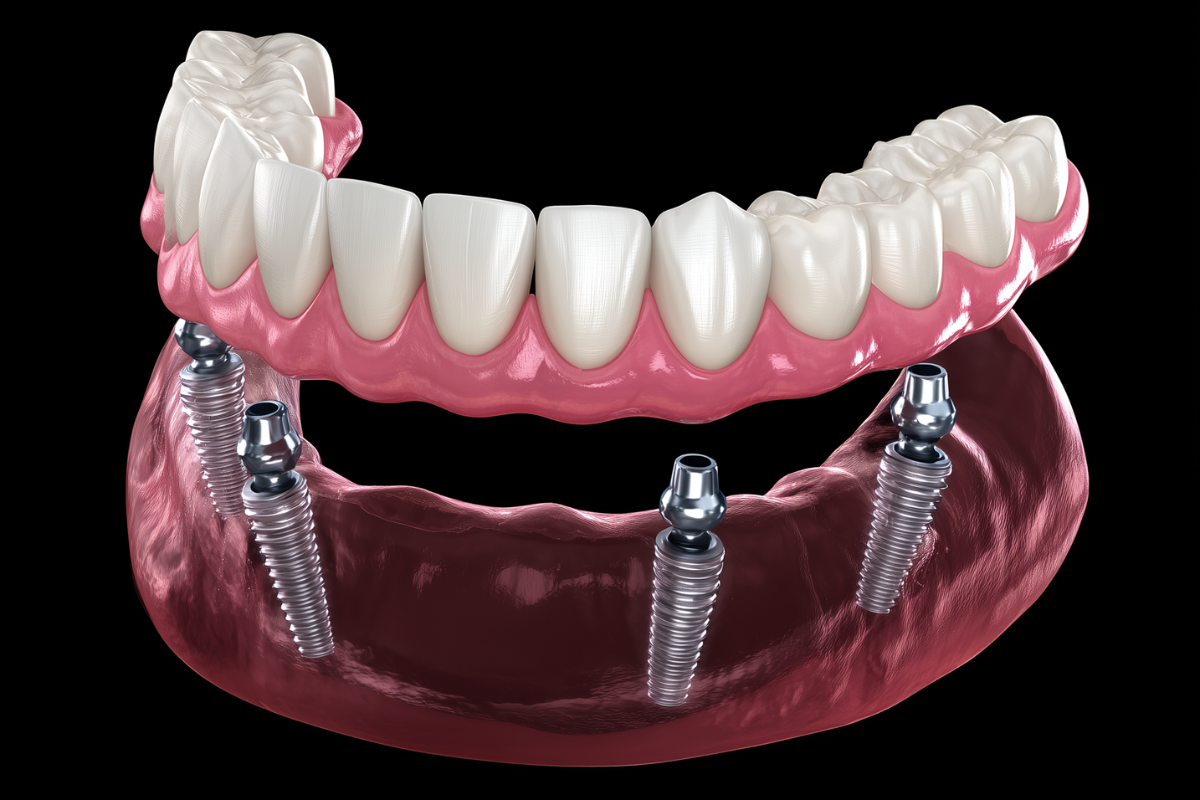
All on 4 is the concept of installing four dental implants in one jaw, on which a fixed bridge is placed - that is, a complete set of teeth.
Instead of individual implants for each tooth, four strategically placed implants are used:
- two in the front of the fork (placed vertically)
- two in the back (placed at an angle)
This arrangement provides stability even in patients with reduced bone mass, often without the need for additional augmentations.
The result? Fixed dentures secured with implant screws – stable, safe and functional.
Is that a prosthesis?
Patients often ask:
"Is that a prosthesis?"
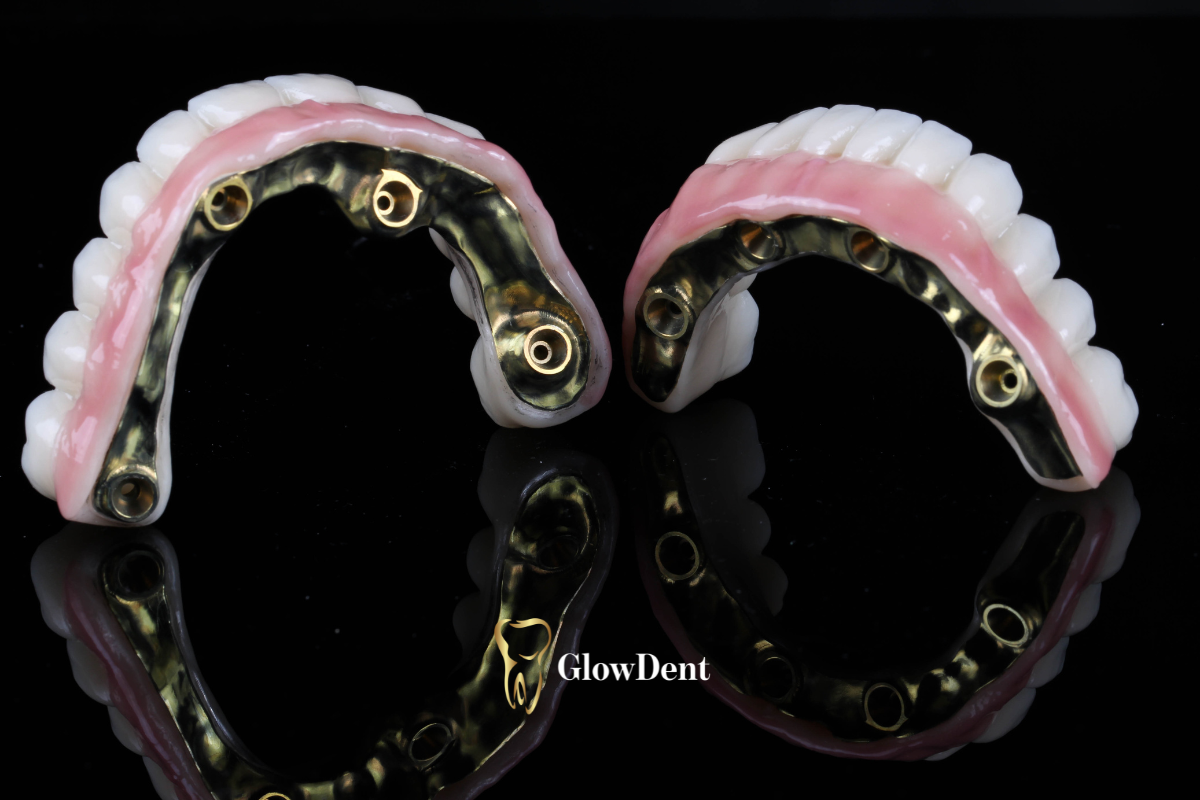
Technically, it is a bridge that is fixed to implants. The term screw-retained denture is often used, but it is important to understand the difference.
Classic removable prosthesis:
- it comes out of the mouth
- can be moved
- leans on the right
All on 4 construction:
- is fixed to implants
- it doesn't move
- the patient cannot remove it themselves
- it functions like natural teeth
That is why the term is often used:
fixed teeth on implants or dental implants all on 4 system.
Who is a candidate for all on 4?
This method is ideal for people who:
- they have no teeth in one jaw
- have teeth that are in poor condition and scheduled for extraction
- they wear total dentures and are not satisfied with the stability
- they want a permanent and secure solution
The good news is that in many cases the therapy can be performed without complex bone augmentation.
Of course, a detailed diagnosis (CBCT scan, bite analysis, general health condition) is mandatory before deciding on therapy.
What does the procedure look like?
The process usually takes place in several stages:
1. Planning
- 3D diagnostics
- digital implant position planning
- analysis of aesthetics and function
2. Surgical phase
- installation of 4 implants
- if necessary, extraction of the remaining teeth
- setting up temporary fixed work
3. Healing phase
- period of integration of the implant with the bone (3–6 months)
4. Definitive work
- creation of a permanent structure (metal-ceramic, zirconium or hybrid materials)
- precise adjustment of bite and aesthetics
Advantages of the all on 4 system
- Fixed teeth in a short period of time
- Stability without movement
- Improved chewing and speech
- A more natural feeling compared to a mobile prosthesis
- A long-term solution
For many patients, this is a turning point – not only functionally, but also psychologically.
Is the procedure painful?
The procedure is performed under local anesthesia, and if necessary, under conscious sedation. Most patients report that the recovery is easier than they expected.
Slight discomfort and swelling are normal in the first few days, but are successfully controlled with therapy.
How long does an all on 4 construction last?
Durability depends on:
- quality of oral hygiene
- regular controls
- general health condition
- habits (smoking, bruxism)
With proper maintenance, all on 4 system dental implants can last for many years and even decades.
Maintenance – the key to longevity
Even though teeth are fixed, maintenance is mandatory:
- regular tooth brushing
- using interdental brushes
- oral douche
- professional cleaning in the office
Fixed doesn't mean “no worries.” Stability comes with responsibility.
Dentist advice GlowDent Banja Luka
If you are looking for a permanent solution for a complete lack of teeth, all on 4 is a modern, stable and aesthetically extremely successful option.
Unlike classic dentures, here we are talking about fixed teeth attached with screws to implants - safe, functional, and natural-looking.
Properly planned therapy and a professional team make the difference between average and excellent results.
Ako razmišljate o ovom rješenju, prvi korak je detaljan pregled i individualna procjena – jer svaki osmijeh zaslužuje precizno planiran pristup.