

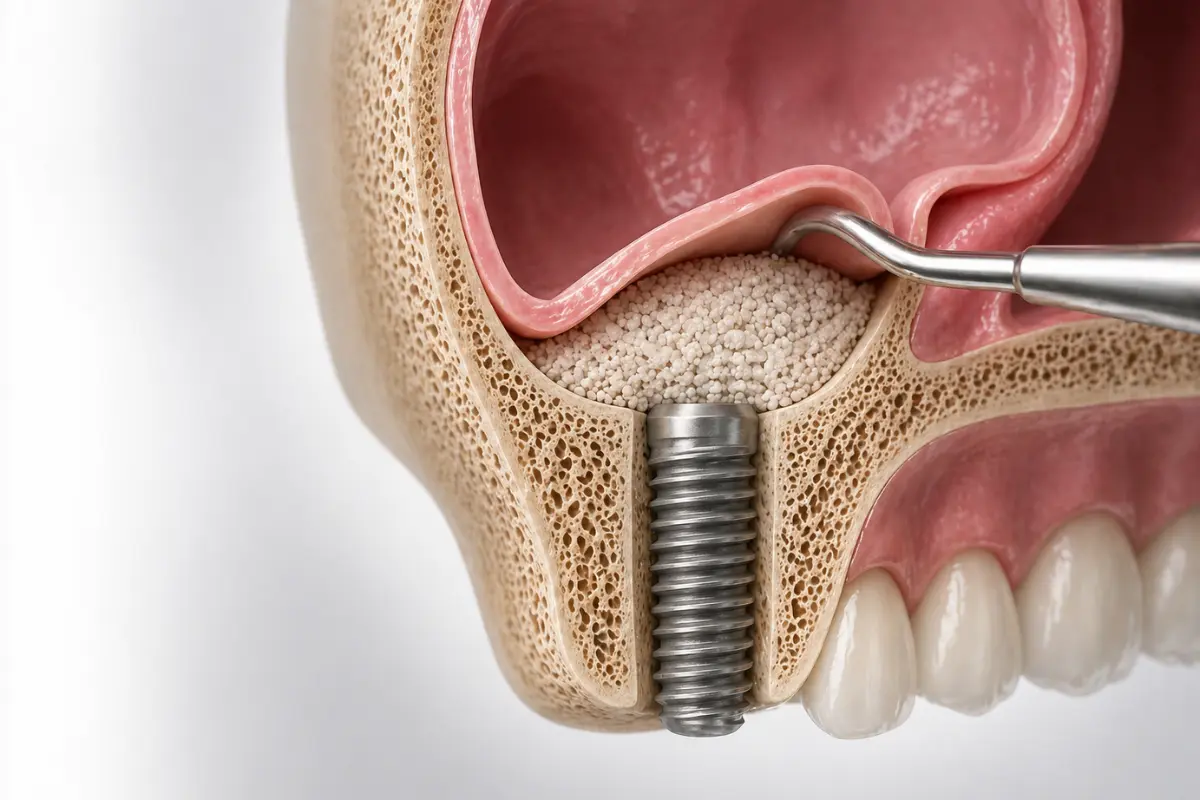
Ugradnja zubnih implantata zahtijeva stabilnu i dovoljnu količinu kosti. Međutim, u gornjoj vilici čest je nedostatak kosti, posebno u zadnjem dijelu (regija premolara i molara).
In these situations, a procedure known as a sinus lift is used - a procedure that allows for safe and permanent implant placement.
What is a sinus lift?
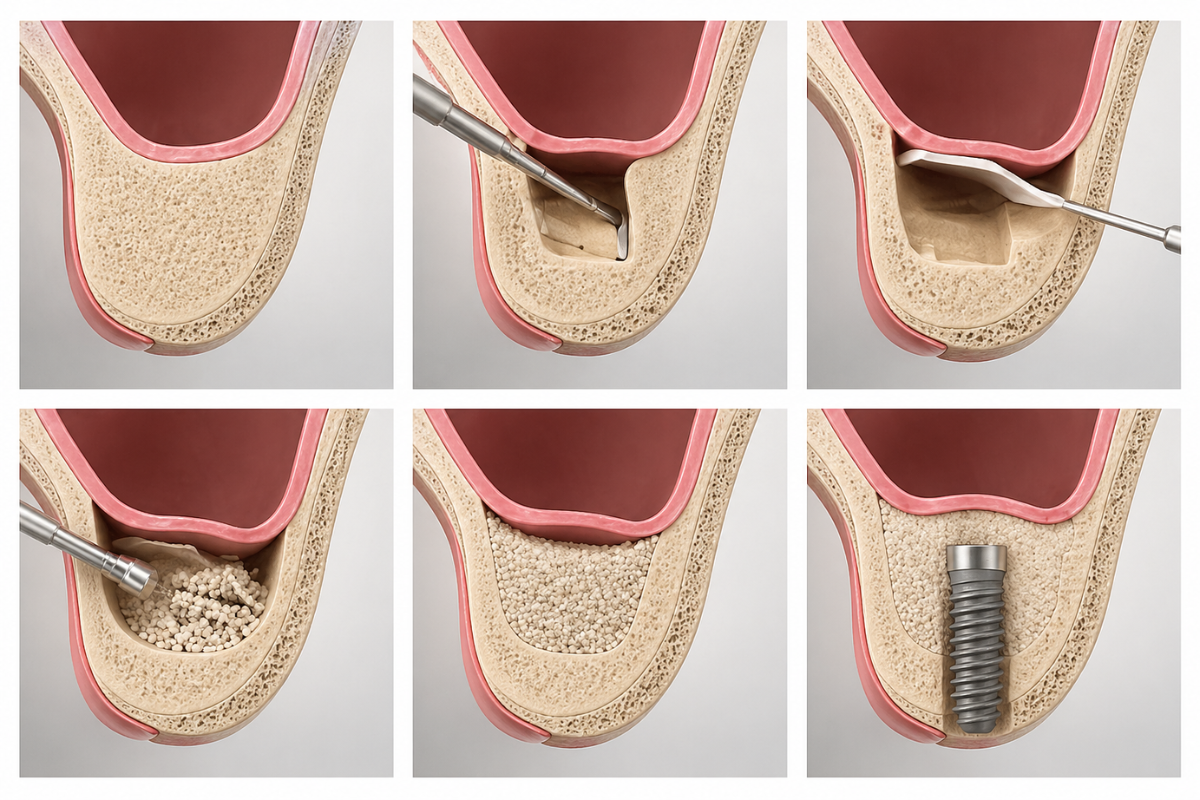
A sinus lift (or sinus lift) is a surgical procedure that lifts the membrane of the maxillary sinus and adds artificial bone to that space.
The aim of the intervention is:
- increase bone height
- create a stable base for implants
- enable long-term success of therapy
In other words, a sinus lift “creates” bone where there is not enough.
Why does bone loss occur?
There are several reasons for the lack of bone in the upper jaw:
- premature tooth loss
- physiological bone resorption
- sinus drainage after tooth extraction
- periodontal diseases
The longer a tooth is missing, the more the bone recedes and the sinus descends – which makes implant placement even more difficult.
When is a sinus lift necessary?
A sinus lift is needed when:
- the amount of bone is not sufficient for a stable implant
- an implant is planned to be placed in the back of the upper jaw
- there is an enlarged sinus that occupies the space intended for the implant
The decision is made based on:
- CBCT scan
- clinical examination
In some cases, a sinus lift and implant placement can be done at the same time, while in others it is necessary to wait for the bone to heal first.
What does the sinus lift procedure look like?
There are two basic sinus lift techniques:
- Closed (internal) sinus lift
- minimally invasive
- it is done through the implant site
- used when a small amount of bone is missing
- Open (lateral) sinus lift
- access through the lateral wall of the sinus
- used for major bone deficiency
- allows the addition of a larger amount of bone material
In both cases, a biocompatible material is used that integrates with natural bone over time.
Is the procedure painful?
Sinus lift is performed under local anesthesia, so the procedure itself is painless.
After the procedure, the following may occur:
- mild island
- feeling of pressure in the sinus area
- minimal discomfort
Everything is successfully controlled with the therapy and instructions the patient receives.
How long does recovery take?
Recovery time depends on the complexity of the procedure:
- minor procedures → a few days of recovery
- larger procedures → complete bone integration 4–6 months
During this period, new bone is formed, which allows for safe and successful implant placement.
Implant success after sinus lift
One of the most important questions is:
Does a sinus lift affect the success of implants?
The answer is – positive.
When the procedure is performed correctly:
- increases implant stability
- correct position is enabled
- The success of the therapy is guaranteed.
Modern studies show that implants after a sinus lift are just as successful as those placed in natural bone.
Advice from GlowDent Banja Luka dentists
If you have a bone deficiency in your upper jaw, it does not mean that you are not a candidate for implants. Thanks to a procedure such as a sinus lift, it is possible to safely and predictably create the conditions for successful therapy.
Sinus lifting is today a routine procedure in implantology that opens the door to permanent solutions - even in complex cases.
Prvi korak je uvijek detaljna dijagnostika i plan terapije prilagođen vašoj situaciji.
Because even when there isn't enough bone – there is a solution.