

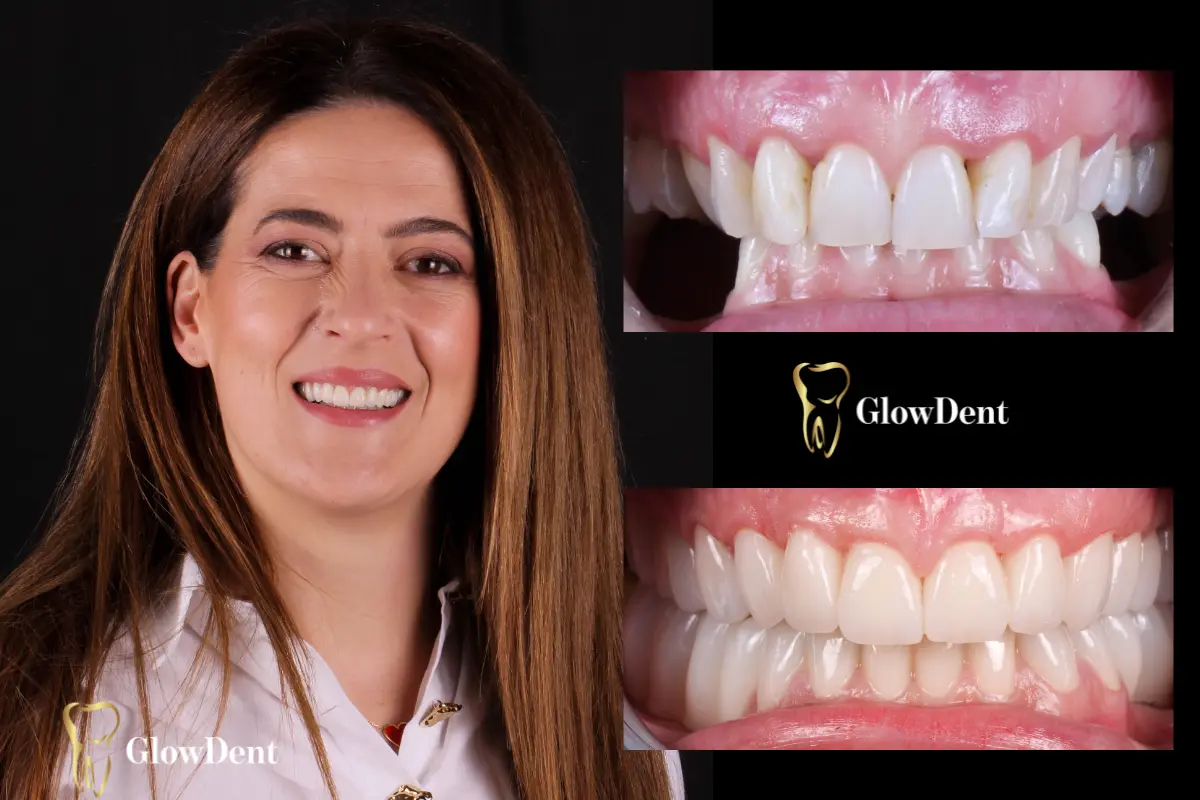
A damaged, broken, or aesthetically unsatisfactory tooth can now be successfully restored thanks to modern dental solutions such as dental crowns and veneers. In addition to restoring tooth function, they also significantly affect the appearance of the smile, self-confidence, and quality of life of the patient.
Many patients ask themselves before coming to the office:
What are the best dental crowns?
How long does the procedure take?
What are the patient experiences?
What is the price of dental veneers?
In this guide, we will explain everything you need to know about dental veneers and crowns, from materials and manufacturing processes to benefits and maintenance.
What are dental crowns?
Dental crowns, also known as dental crowns, are prosthetic restorations that cover the entire visible part of a tooth. Their role is to protect a weakened tooth, restore its shape and function, and improve the aesthetics of a smile.
Crowns are most often recommended when a tooth is:
- severely damaged by caries,
- broken or cracked,
- weakened after root canal treatment,
- aesthetically irregular in shape or color,
- worn out from grinding your teeth,
- part of implantology work.
Modern crowns today look completely natural and are often almost impossible to distinguish from a natural tooth.
When are dental crowns needed?
There are several situations when a dentist recommends dental crowns.
1. Protecting a weakened tooth
After major fillings or nerve treatment, the tooth becomes more fragile and susceptible to cracking. A crown provides additional protection and extends its lifespan.
2. Aesthetic smile correction
Patients often opt for braces to correct:
- dark or discolored teeth,
- irregular shapes,
- spaces between teeth,
- old and unaesthetic works.
3. Implant replacement
In implant therapy, a crown is placed on the implant, which represents the final part of the tooth visible in the mouth.
4. Reconstruction of broken teeth
If a natural tooth is significantly damaged, a crown allows for its functional and aesthetic restoration.
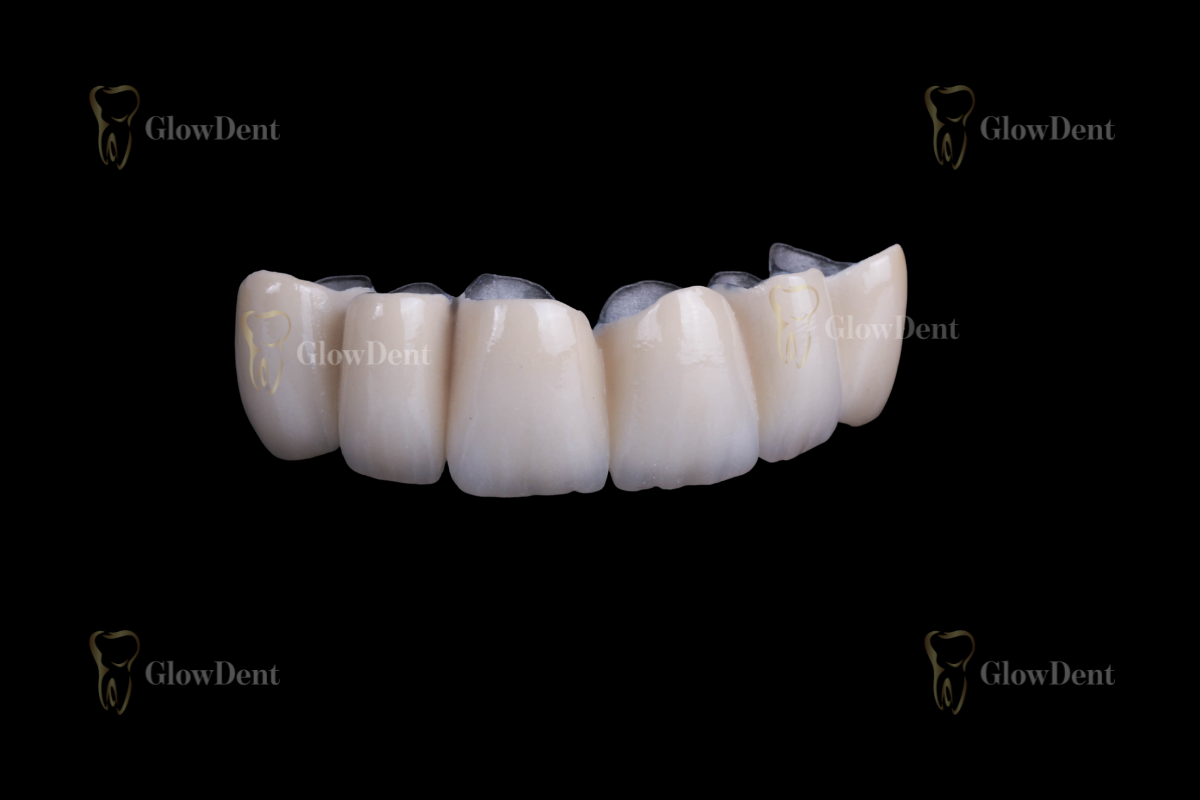
What types of dental veneers are there?
Today, there are several types of crowns, and the choice depends on the functional needs, aesthetics, and wishes of the patient.
Metal-ceramic crowns
These crowns have a metal base covered with ceramic.
Advantages:
- good strength,
- longevity,
- more affordable price.
Disadvantages:
- less transparency,
- possible gum recession and the appearance of a dark rim after years of use.
Zircon crown
Zirconium crowns are one of the most popular solutions in modern dentistry today.
Advantages:
- superior aesthetics,
- natural look,
- without metal edge,
- excellent biocompatibility,
- great resistance.
Due to their appearance and quality, many patients believe that zirconia crowns are the answer to the question: What are the best dental crowns?
They are especially popular in the anterior region where aesthetics are most important.
EMAX crowns
EMAX crowns are made of high-quality glass ceramics and are known for their exceptional aesthetics.
They are most often used for:
- front teeth,
- smile of transformation,
- highly aesthetic works.
Their advantage is their distinct transparency, which closely resembles natural tooth enamel.
What does the process of making dental veneers look like?
Patients are often interested in how long the whole process takes and whether it is painful.
The procedure generally takes place in several steps:
Examination and therapy plan
First, a detailed dental examination is performed and, if necessary, an X-ray or 3D scan is taken. The dentist assesses the condition of the teeth and suggests the best solution.
Tooth preparation
The tooth is minimally shaped so that the crown can fit properly.
Fingerprinting or digital scanning
Modern dental offices today use intraoral scanners that enable precise digital planning of work.
Temporary crown
While the final work is being made, the patient receives a temporary crown.
Placing the final crown
When the work is finished, the dentist checks:
- form,
- bite,
- color,
- contact with neighboring teeth.
After that, the crown is cemented.
Is crown placement painful?
One of the most common questions patients ask is whether the procedure hurts.
In most cases, the procedure is completely painless because it is performed under local anesthesia. After the treatment, there may be mild sensitivity, which usually passes very quickly.
Modern dentistry makes the entire process pleasant and safe for the patient.
Dental veneers patient experiences
Patients' experiences after crown placement are most often very positive.
Patients particularly emphasize:
- a more natural-looking smile,
- greater confidence,
- easier chewing,
- a sense of stability,
- long duration of work.
Many people say that after a certain time, they completely forget they have crowns because they look and function like natural teeth.
Of course, the quality of work depends on:
- experiences of dentists,
- quality of laboratory production,
- proper treatment planning,
- maintaining oral hygiene.
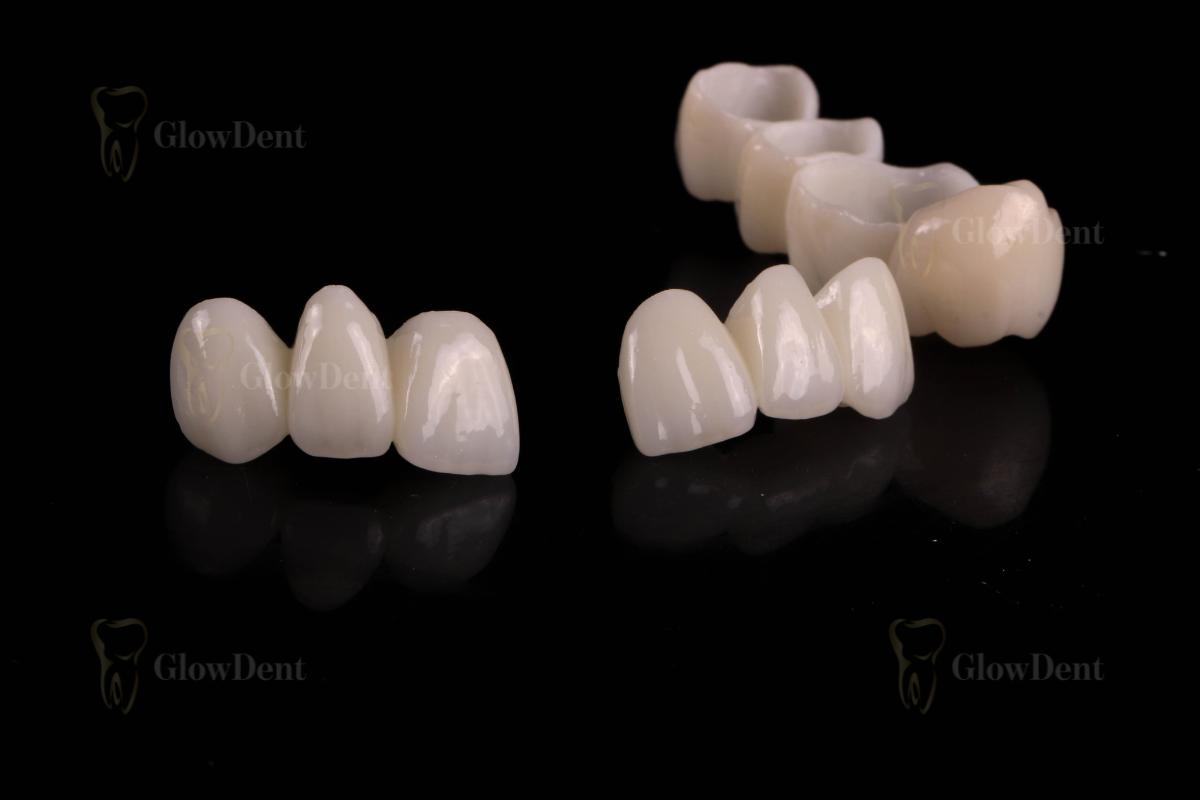
What is the price of dental veneers?
The price of dental veneers depends on several factors:
| Factor | Price impact |
|---|---|
| Type of material | Zircon and EMAX are more expensive than metal ceramics |
| Number of crowns | A larger number of works increases the total price |
| Dental condition | Sometimes additional therapy is needed |
| Implantology works | Implants and crowns have a special price. |
| Digital technology | Modern CAD/CAM systems affect quality and price |
It is important to understand that crowns represent a long-term investment in the health and appearance of your smile.
How long do dental crowns last?
With proper maintenance, quality dental crowns can last 10, 15, or even more years.
Their durability depends on:
- oral hygiene,
- regular controls,
- material quality,
- habit of the patient,
- teeth grinding.
Patients who have bruxism are often recommended a night splint to protect the crowns from overload.
How to maintain dental veneers?
Crowns require the same care as natural teeth.
It is recommended:
- regular tooth brushing,
- using floss or interdental brushes,
- professional limescale cleaning,
- regular dental check-ups.
Although the crown itself cannot get cavities, the natural tooth underneath it still requires protection and proper hygiene.
What is the difference between veneers and dental crowns?
Patients often confuse veneers and crowns, even though they are two different prosthetic solutions.
Veneers are thin ceramic scales that cover only the front surface of the teeth and are used mainly for aesthetic corrections. Their teeth grinding is minimal.
On the other hand, crowns or covers cover the entire tooth and are used when it is necessary to additionally strengthen and protect the dental structure.
In situations where a tooth is severely damaged, weakened, or treated, crowns are a safer and longer-lasting solution.
How long does it take to make dental veneers?
The processing time depends on the complexity of the case and the type of work.
In most cases, the process takes from a few days to two weeks. During this period, the patient wears temporary crowns that allow for normal function and aesthetics.
With modern digital systems and CAD/CAM technology, it is possible to achieve exceptional precision and faster production of works.
Can crowns be distinguished from natural teeth?
Modern dental crowns can look extremely natural today. This is especially true for zirconia and EMAX crowns, which have a transparency similar to natural enamel.
Good communication between the dentist and dental technician plays a big role in the final result, especially when it comes to:
- tooth color
- form,
- size,
- natural surface texture.
The goal of modern dentistry is not just functionality, but a smile that looks natural and harmonious with the patient's face.
What are the best dental crowns?
There is no universal solution for every patient.
The best dental crowns are those that:
- meet functional needs,
- provide the desired aesthetics,
- match the position of the teeth,
- They have quality laboratory production.
For anterior teeth, patients most often choose zirconia or EMAX for aesthetics, while for the posterior regions, strength and functionality are often combined.
The most important thing is that therapy be individually planned for each patient.
The most frequently asked questions by patients about dental covers
Can crowns fall out?
Quality crowns that are made and properly cemented rarely fall out. If this happens, you should see your dentist for a check-up.
Do crowns change color?
Ceramic and zirconia crowns are highly resistant to color changes and pigmentation compared to natural teeth.
Can individual rosaries be made?
Yes. Crowns can be made individually or as part of larger prosthetic works.
How often should crowns be checked?
Regular check-ups are recommended every six months to check the condition of the gums, bite, and the crown itself.
Dentist advice GlowDent
Dental crowns and veneers are one of the most effective solutions for restoring the function and aesthetics of a smile. Thanks to modern materials and digital technology, today's crowns look natural, are long-lasting, and provide a high level of comfort.
Whether you want to protect a damaged tooth, improve the appearance of your smile, or complete implant therapy, the right choice of crowns can significantly improve your quality of life and self-confidence.
The best way to find out which solution is ideal for you is through a detailed examination and consultation with an expert team of dentists and dental technicians.