

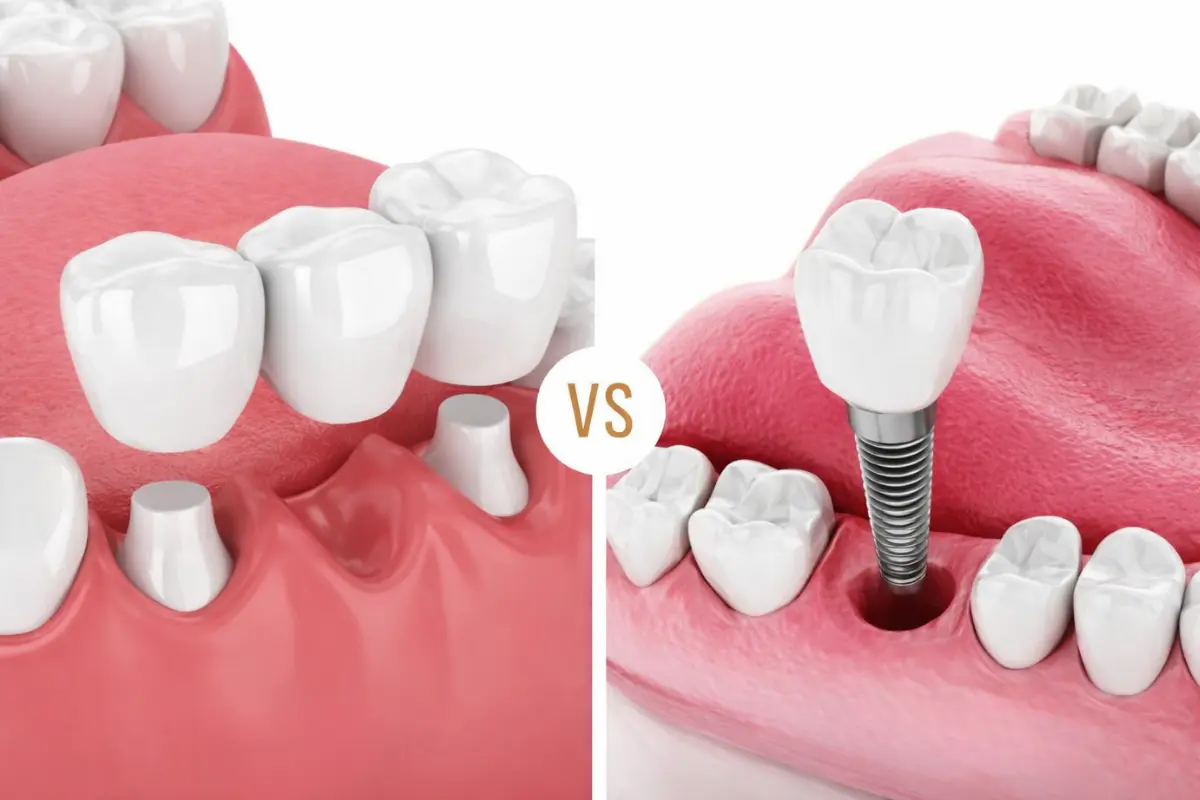
Gubitak jednog zuba može djelovati kao mali problem, ali dugoročno može uticati na funkciju žvakanja, raspored zuba i estetiku osmijeha. Kada se suočite sa nedostatkom jednog zuba, moguća su dva rješenja: zubni most ili implantat.
This decision is not just an aesthetic one – it directly affects chewing function, dental health, and bone health. Below, we clearly explain the difference between the above options so you can make the best decision for yourself.
What is a dental bridge?
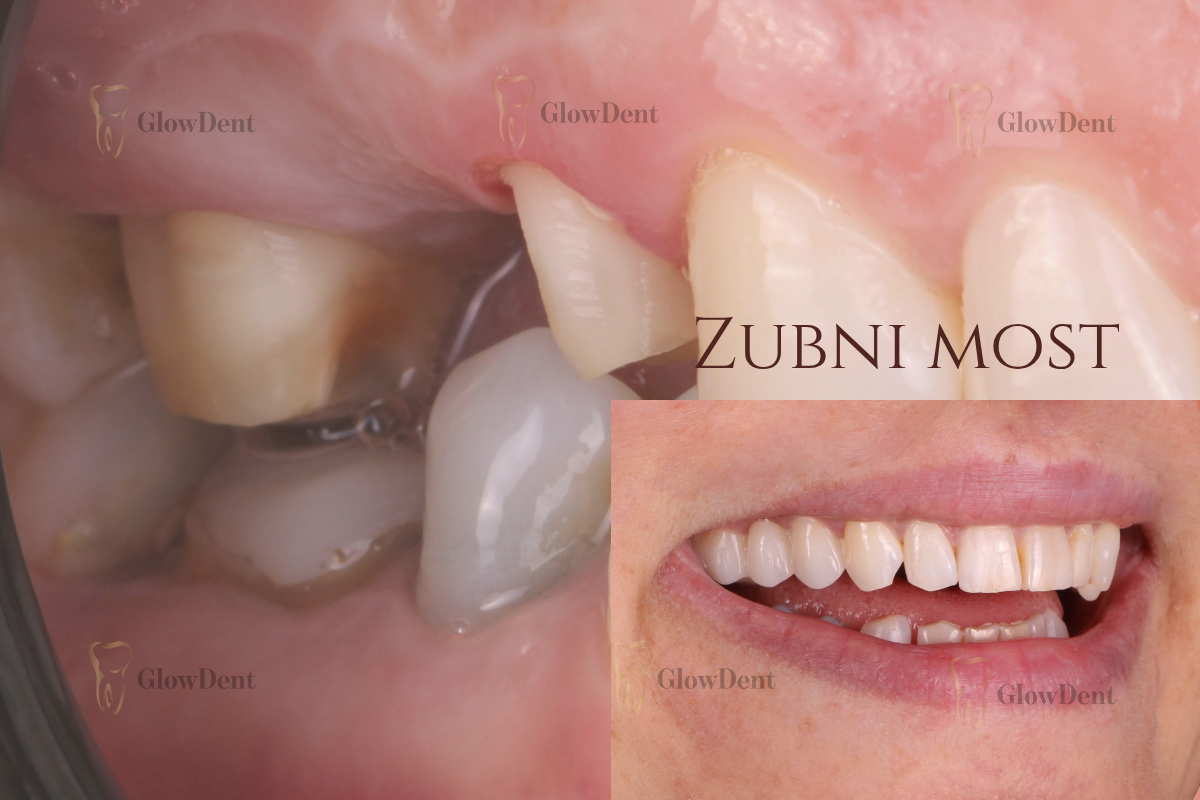
A dental bridge is a fixed prosthetic work that replaces one or more lost teeth by relying on neighboring teeth.
How it works:
- neighboring teeth are being ground down
- crowns are placed on them
- between them there is a "spacer" that replaces the lost tooth
That is why it is often called a dental bridge, because it relies on natural teeth.
What does an implant mean?
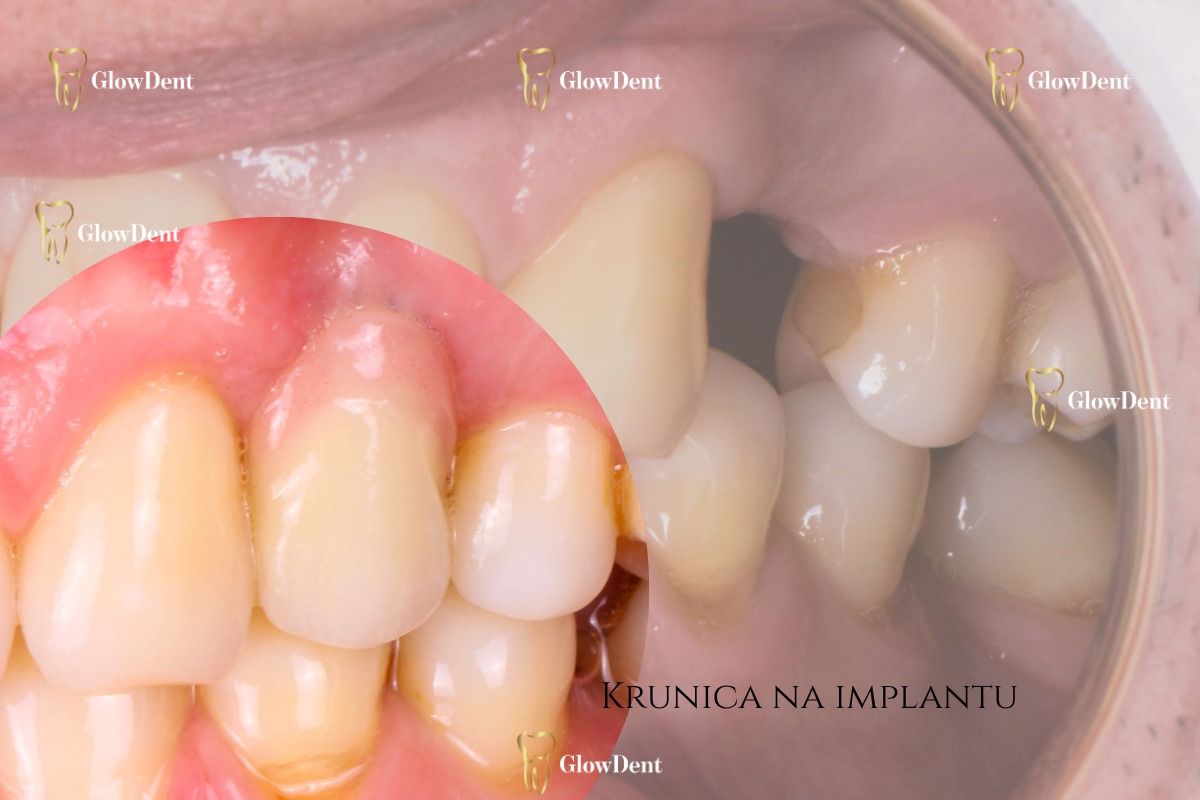
An implant is a titanium "screw" that is inserted into the bone and replaces the root of a tooth. A crown is placed on it that looks and functions like a natural tooth.
Unlike the bridge:
- does not touch neighboring teeth
- it functions independently
- preserves the bone and structure of the jaw
Key difference: grinding adjacent teeth
The biggest difference between these two options is that a dental bridge requires grinding of adjacent teeth.
At the bridge:
- healthy teeth must be treated
- they become the carriers of the structure
For implants:
- Die Nachbarzähne bleiben intakt
- the solution is individual and independent
This is often the deciding factor.
Advantages of a dental bridge
Dental bridges have their advantages:
- faster production (several visits)
- lower starting price
- non-surgical solution
- good aesthetic result
A bridge is an especially good option when adjacent teeth are already damaged and require crowns.
Advantages of the implant
Implants are today the gold standard in many situations:
- do not require grinding of adjacent teeth
- protect the bone and prevent it from receding
- a long-term and more permanent solution
- more natural feel and function
For patients missing one tooth, an implant is often the optimal solution.
When to choose a bridge and when an implant?
A dental bridge is a better choice when:
- neighboring teeth already have large fillings or crowns
- you want a faster solution
- you don't want surgery
- there are medical restrictions for implantation
An implant is a better choice when:
- the adjacent teeth are healthy
- you want a long-term solution
- you have enough bones
- you want to preserve the natural structure of your teeth
What is more profitable in the long run?
Although a dental bridge is often more affordable initially, implants can prove to be more cost-effective in the long run because:
- they last longer
- they do not burden other teeth
- reduce the need for additional interventions
Aesthetics and function
Both a bridge and an implant can provide an excellent aesthetic result.
However:
- The implant gives a more natural feel
- better imitates the function of the tooth root
- contributes to preserving the contour of the gums
Advice from GlowDent Banja Luka dentists
When it comes to choosing between a dental bridge and an implant, there is no universal solution – there is one that is best for your oral status.
- A dental bridge is a faster and simpler solution
- An implant is a longer-term and more biologically advanced option
Najvažnije je da odluku donesete zajedno sa stručnim timom, na osnovu pregleda i detaljnog plana terapije.
Because the right choice is not just a matter of teeth – but the quality of life that comes with a smile.