

If you are considering prosthetic treatment, one of the first questions you will likely ask is: "How much do dental crowns cost?" This is completely understandable, as price is an important factor when planning treatment. However, when it comes to dental crowns, there is no single answer that applies to every patient.
The price depends on several factors: the type of material, the number of teeth being replaced, the condition of the natural teeth, the need for additional procedures, and the method of fabricating the prosthetic restoration.
That is precisely why the final price is determined only after a detailed dental examination and the creation of an individual treatment plan.
What does the price of dental crowns depend on?
When preparing a quote, the dentist takes into account several factors that directly influence the cost of treatment.
Type of material
The most common choices are:
- metal-ceramic crowns,
- zirconia crowns,
- all-ceramic crowns.
Each material has its own advantages in terms of aesthetics, strength, and durability.
Number of teeth
The price will vary depending on whether it is produced:
- one crown,
- multiple individual crowns,
- dental bridge,
- comprehensive prosthetic rehabilitation.
Dental condition
Sometimes, before fabricating the crown, it is necessary to:
- cure caries,
- treat root canals,
- install an upgrade,
- strengthen the tooth.
Such procedures are part of the overall therapy.
Digital planning and laboratory fabrication
Modern dentistry today entails precise treatment planning, high-quality materials, and laboratory fabrication that significantly influence the final result.
A well-made crown is not only aesthetically pleasing but must also be functional, precise, and durable.
What types of dental crowns are there?
The most common types are:
Metal-ceramic crowns
Metal-ceramic restorations consist of a combination of a metal framework and a ceramic veneer.
Its advantages are:
- great strength,
- long service life,
- excellent value for money,
- A very good choice for posterior teeth and bridges.
Zirconia crowns
Zirconia is a modern, high-tech material.
Advantages:
- superior aesthetics,
- natural translucency,
- excellent biocompatibility,
- without a dark metal edge.
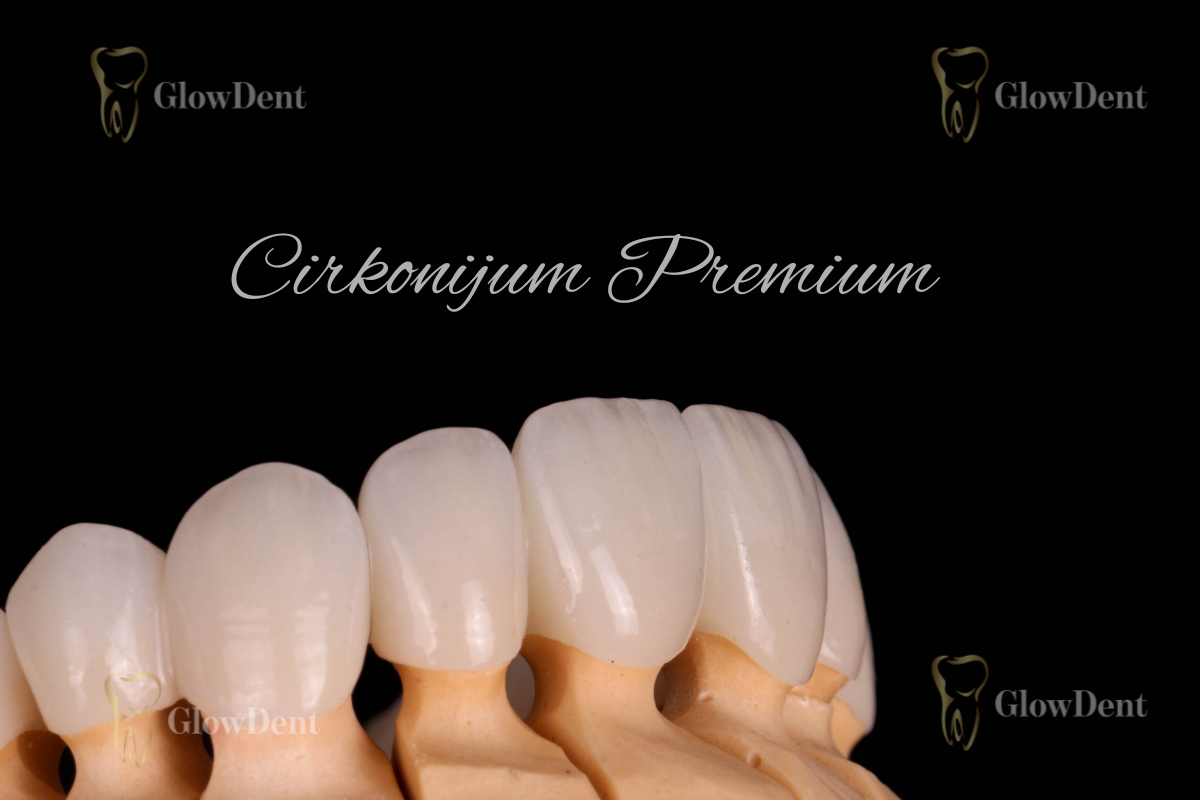
All-ceramic crowns
They are used when aesthetics is the absolute priority, especially for individual anterior teeth.
How much do dental crowns cost in Bosnia and Herzegovina?
Various prices can be found online, but it is important to know that they depend on:
- of the city,
- experiences of dentists,
- laboratory quality,
- verwendetes Material,
- complexity of the therapy.
Therefore, it is not possible to provide a single price that would apply to all patients.
The most important thing when choosing a dental practice is not to consider only the price, but also the quality of the work, the team's experience, the materials used, and the long-term success of the treatment.
Dental veneers and their price in Banja Luka
Patients seeking dental crowns in Banja Luka often want to find a balance between quality, aesthetics, and durability.
At the GlowDent practice, every treatment plan is created individually. Following the examination, the condition of the teeth, bite function, and the patient's aesthetic expectations are assessed in order to recommend a solution that will deliver the best long-term results.
Modern planning methods and high-quality prosthetic materials are used, and every restoration is crafted with special attention to precision, functionality, and a natural appearance.
Crown prices at the GlowDent clinic are:
| Classic metal-ceramic | 250 KM |
| Premium metal-ceramic | 280 KM |
| Full-contour zirconia crowns | 350 KM |
| Cirkonijum – squin | 430 KM |
| Premium Zirconia | 500 KM |
Why is it not a good idea to choose the cheapest covers?
Many patients compare prices first when searching, which is entirely understandable. However, the lowest price does not always mean the best choice.
The quality of the finished work is influenced by:
- dentist's experience,
- quality of the dental laboratory,
- type of material,
- manufacturing precision,
- proper therapy planning.
A well-made crown can last for many years, making quality an investment that pays off.
What is included in the price?
In most cases, the price does not cover only the crown itself.
The therapy may include:
- review,
- diagnostic,
- treatment plan,
- tooth preparation,
- digital or classic print,
- temporary crown,
- laboratory production,
- crown try-in
- permanent cementation,
- follow-up examination.
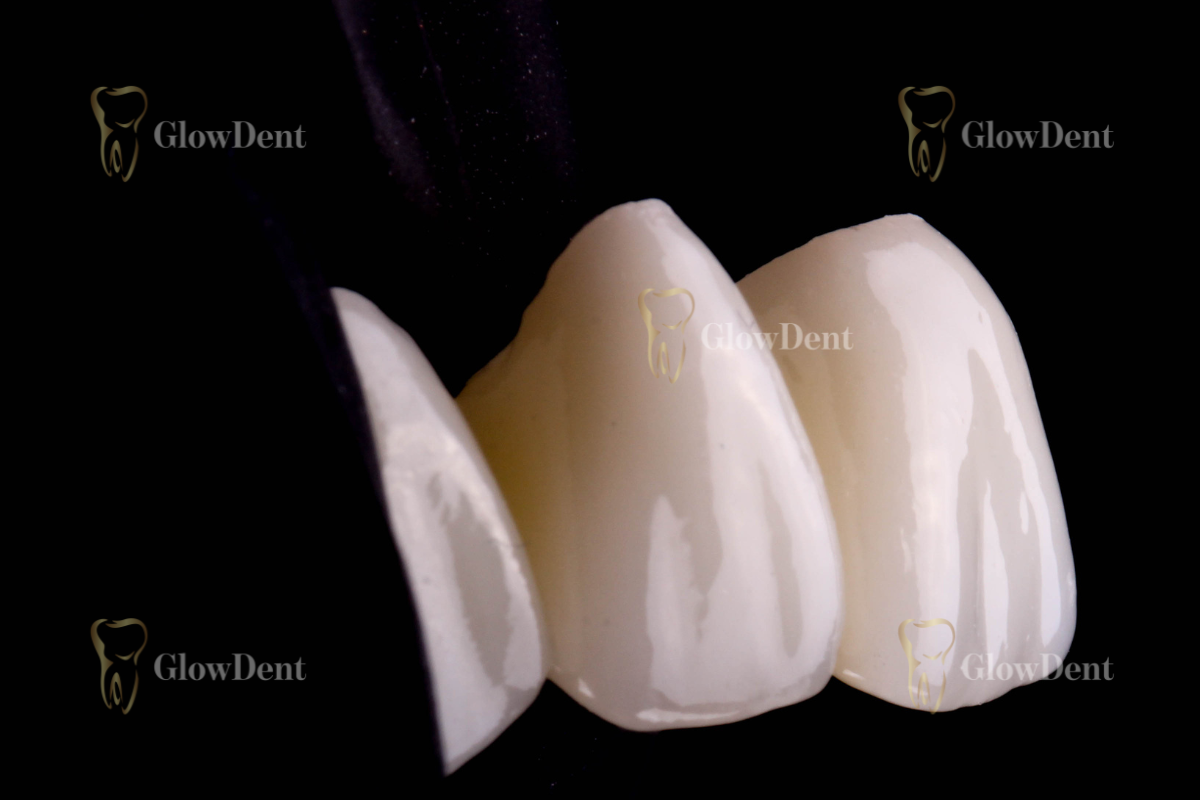
For example, you can easily see what is concrete on the bridge.
Koliko traju navlake za zube?
Uz pravilnu oralnu higijenu and redovne control, kvalitetno izrađene navlake mogu trajati I preko 10 godina.
Their longevity depends on:
- oral hygiene,
- regular controls,
- build quality,
- patient's habit.
How do you choose the right type of crown?
There is no one-size-fits-all solution.
The following are taken into account during the selection process:
- tooth position,
- function,
- aesthetics,
- budget,
- patient expectations.
After the examination, the dentist will recommend the material that best suits your situation.
Frequently Asked Questions
How much do dental crowns cost in Bosnia and Herzegovina?
The final price depends on the type of material, the number of teeth, and the complexity of the treatment, so it is determined after an examination.
Are zirconia crowns more expensive than metal-ceramic ones?
In most cases, they are, as they offer superior aesthetics and are made from modern, high-quality materials.
How long does it take to make the crown?
Most often between a few days and two weeks, depending on the treatment plan and the laboratory process.
Do the covers look natural?
Yes. Modern prosthetic materials allow for the creation of crowns that blend very successfully with natural teeth in terms of color, shape, and function.
Do the covers require special care?
No. They are maintained just like natural teeth – through regular brushing, the use of interdental brushes or floss, and regular dental check-ups.